

Running Tips For Beginners is a great way to get in shape, lose weight, and reduce stress. In 8 Best Running Tips For Beginners, you will see that running is both an affordable and relatively easy way to exercise. It can significantly improve your physical and mental health. As a form of aerobic exercise, running can improve heart health and may even help reduce depression symptoms. All you need to get started is a good pair of running shoes. From there, you can take it step by step, as you will see in this guide.

🏃 Running Motivation Is Essential
Running is one of the simplest forms of exercise you can choose when you want to get in shape and become a new version of yourself. It can make you healthier, more relaxed, and more confident.
You can run alone and almost anywhere – in the forest, in the city, or wherever you feel comfortable. There are no opening hours, no special technical skills required, and very little equipment needed. You just have to get started.
And yet, it is not quite that simple. Even though almost everyone can run, some people end up putting their running shoes away again after a few weeks – often because their motivation begins to fade. Motivation is what helps you create and maintain the behavior needed to achieve something specific – in this case, starting and maintaining a running project.
It is therefore important to plan your training for the time of day when you are most motivated. If you are most motivated in the morning, run in the morning. If you find it easier to get out in the evening, plan your training then.
One of the hardest things about running is keeping the training going. If you can create a good habit and make running a regular part of your everyday life, it becomes much easier and less complicated to train.
One way to increase your motivation is to find a training partner. Making regular appointments with another person makes it harder to skip a run and gives you something to look forward to. Meeting a friend can be much more motivating than always having to run alone.
When you do run alone, it can be a good idea to vary your training and your routes so you do not always run the same way. Have a few different routes to choose from. Explore the residential streets in your neighborhood or discover forest trails that you do not normally run.
👉 Read more about realistic running goals and staying motivated as a beginner.
🎯 Set Realistic Running Goals

Regardless of your level of ambition, there is usually a reason why you want to run. Those reasons can be very different, and they are all equally valid. If you want to keep running, it is important to understand what lies at the heart of your desire to run.
Once you become aware of your own motivation, it becomes easier to make running part of your life. It takes time for new habits to become established and for old habits to fade. But once running becomes a natural part of your everyday life, it can stay with you as a good friend for many years. You may even miss it if you stop.
It is therefore worth taking some time to look inward and understand what motivates you to run. One way to stay motivated is to set personal running goals. This could be losing a certain amount of weight, completing a particular race, or simply getting out for a run two or three times a week.
Having a goal can help you stay motivated even when the weather is poor or you are not in the mood to run. Often, your mood improves after the first few minutes, once your body has warmed up and you have settled into your run. The rain may suddenly seem less important, and the worries of everyday life may feel a little lighter.
👉 Read more about setting SMART running goals for beginners.
Start where you are, set a realistic goal, and give your body time to adapt.
👣Previous Training Experience
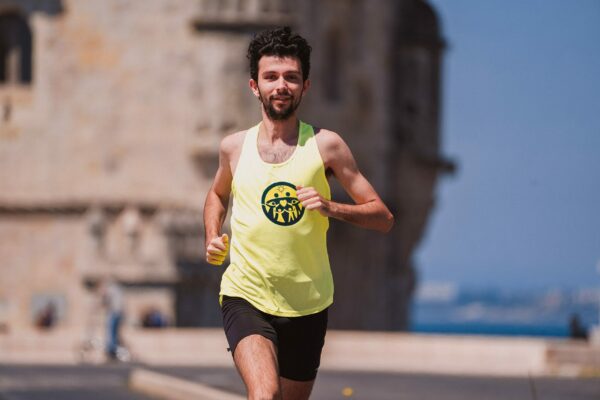
The first few runs are crucial in determining whether you want to continue. To create good experiences from the beginning, your training should feel easy and comfortable. You should be able to complete your planned run and still feel that you have some energy left. That makes you want to run again.
If you set your expectations too high at the beginning, you can easily get the feeling that running is too difficult. It is therefore better to set your ambitions a little too low when you start your running training.
Running should challenge you, not overwhelm you.
A good piece of advice is to use your current fitness level as your starting point. If you play tennis or football several times a week and cycle to and from work every day, your starting point will naturally be different from someone whose daily life involves very little physical activity.
But it does not really matter what type of exercise you are used to. If running has previously been an important part of your training, the muscles and tendons involved in running will already have some level of adaptation and strength.
You can therefore start your running training at a higher level than someone who has mainly cycled or swum. The crucial factor is whether your legs are accustomed to the impact and loading that comes with running.
If running is an unfamiliar strain on your joints and tendons, it is better to start more cautiously during the first few weeks than you might think necessary. After a few weeks, you will have a clearer picture of your ability and can adjust your training load to your current fitness level.
If you train too hard when you start running, you will most likely become very sore in the days after your first runs. This can easily give you the feeling that your body simply is not made for running.
But it is! Muscle soreness after exercise is usually not dangerous. It is a sign that your body has been challenged and is responding to the training.
Some soreness is almost inevitable when you start, but it usually lasts only a few days. If you start carefully and increase your training gradually, you can keep it to a minimum.
👉 Read more about improving your fitness level through running.
📋Follow a Beginner’s Running Program
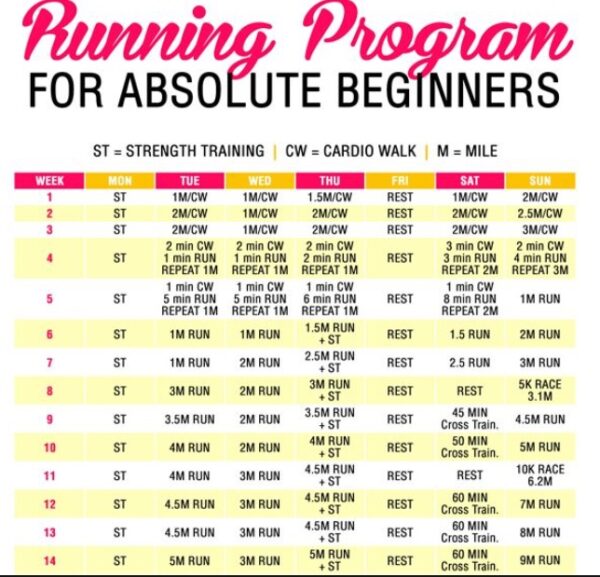
When you start following a structured running program, the individual and unstructured aspects of training become more organized. A training program provides structure and helps ensure progression. It also gives you an overview of your training, helps prevent overload, and can reveal whether your training is too hard or perhaps too easy.
A training program can be built around two or more training phases, depending on how many peaks in fitness you want to achieve during a season.
The first phase contains the basic training, where the training volume is gradually increased so that your fitness develops in relation to your goal. The next phase focuses on reaching a peak in fitness at the time of your chosen race.
A training phase is therefore not the training program itself. It describes the upcoming training period and contains key information such as the number of weeks leading up to the race, expected weekly mileage, and the expected training intensity.
👉 Read more about going from couch to 5K step by step.
🗓️Running Training Program
The training program itself is more detailed than the framework plan. It specifies what you train on each day, for example when to run longer distances and when to include speed or interval training.
This creates a structured plan for the week’s training. A good training program should include the following basic elements:
– Variation
– Training volume
– Quality training
– Rest and recovery
You may prefer not to follow a training program and simply run according to how you feel on the day. But there are several different types of running training, such as:
– Interval training
– Sprint training
– Pace training
– Strength training
– Warm-up
– Recovery training
– Long runs
So here are some questions to consider:
– If you do not follow a training program, how do you know whether you are getting stronger, fitter, or faster?
– How do you maintain your motivation without clear goals and structure?
– How do you account for the fact that strength and progress are not linear processes?
– How do you know where you are going if you do not know where you have been?
– How do you know whether your training is progressing or whether something needs to change?
As you can probably see, a training program can make it easier to measure your progress and improvements in your running.
👉 Read more about building your first beginner 5K training plan.
👟 Buy a Pair of Great Running Shoes
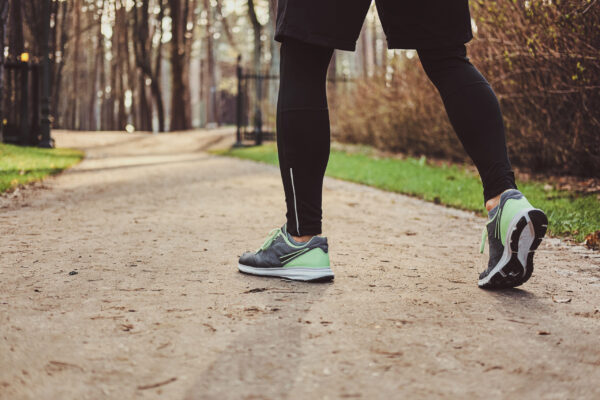
The right running shoe should work together with the joints, tendons, and muscles in your legs to provide cushioning and support. It should protect your feet from the surface you run on while allowing your feet to move naturally and comfortably.
To get the most out of your running and reduce the risk of problems, it is important to find running shoes that suit you. But choosing the right pair can feel confusing when you are standing in a running shop surrounded by a wall of shoes from floor to ceiling.
Running shoes can generally be divided into different categories based on factors such as foot shape, running style, and the type of running you do. It can therefore be helpful to understand your own feet and running style before choosing a pair of running shoes.
Running Shoe Choice
Dividing running styles into categories can make it easier to choose running shoes. However, the transition between different running styles is always fluid. The choice of shoe should therefore be based on an overall assessment of your feet, running style, body, running volume, and goals.
Professionals may sometimes have different opinions about which factors are most important when choosing a running shoe. Their advice can be useful, but it should be part of your own overall assessment of what feels right for you.
Price is another consideration. More expensive running shoes often use more advanced materials and construction, but a higher price does not automatically mean that a shoe is the right choice for you. Comfort, fit, and suitability for your running are more important than simply choosing the most expensive model.
As you start running more regularly, it can also make sense to have two pairs of running shoes that complement each other – for example, a lighter pair for faster running or races and a more durable pair for everyday training.
⌚ Best Sports Watch – Your Digital Running Partner

Over the last many years, there has been tremendous development in technology for tracking your running and training. Today, even a basic sports watch can measure things such as heart rate, distance, calories burned, recovery, and much more.
Best GPS Watch – Upload Data to Online Apps
Most newer sports watches and smartwatches have GPS, allowing you to track your runs and upload large amounts of data to platforms such as Strava and Garmin Connect. Many watches also provide advanced heart rate and training metrics.
This technology has turned the running watch into a digital training partner that can give you valuable insight into your fitness and training. You can also build a comprehensive training diary if you want to follow your development over time.
You can compare your own training with others as well. The continuous measurement and storage of your training is often referred to as tracking, and a running watch can be a useful tool for this purpose.
If you are motivated by technology and know how to use the information it provides, a sports watch can give you a much better understanding of how you train, what you train, and how effectively you are progressing. If that sounds like you, put on your sports watch, start tracking, and enjoy exploring your running.
🥗 Diet For Running Training

When we talk about a good diet for runners, it is very similar to a generally healthy diet. Eat a varied diet based on quality foods and limit your intake of highly processed foods.
Take a Light Meal Before the Run
During the 3–4 hours before a run, you do not need a large meal. Your glycogen stores are already supported by the food you have eaten in the days leading up to your training.
A small meal containing easily digested carbohydrates can therefore be a good choice. Oatmeal, wholemeal bread, or a pasta salad with chicken and vegetables are examples of suitable pre-run meals. If you get hungry just before training, a banana or an energy bar can be a simple option.
Eat the Right Carbs
It is about choosing the right carbohydrates at the right time. On days when you are not exercising hard, you can focus on complex carbohydrates with a low glycemic index. You will typically find these in foods such as vegetables, whole grains, and legumes.
Boost Your Recovery After Training
After training, it is important to give your body the nutrients it needs to recover. Carbohydrates help replenish glycogen stores, while protein supports the body’s repair and adaptation processes.
A balanced meal after training is therefore a good way to support your recovery.
Healthy Fats in Your Meals
If you want to support your overall health, focus on unsaturated and polyunsaturated fats found in foods such as nuts, seeds, oils, and fatty fish. Foods high in saturated fat can still be part of a balanced diet, but are generally best consumed in moderation.
It is also a good idea to limit foods containing industrial trans fats, which can be found in some highly processed foods.
Protein Is a Building Block of the Body
Protein is found in both plant-based and animal foods such as meat, fish, dairy products, beans, lentils, and other legumes. Protein plays an important role in maintaining and rebuilding the body’s tissues after training.
You can get all the essential amino acids from a vegetarian diet as long as you eat a varied diet with a good combination of protein sources.
Fluid Intake
Water is essential for health and for maintaining performance during exercise. Make sure you start your training well hydrated, and drink according to your needs during the run.
For shorter runs, water is usually sufficient. During longer or more demanding sessions, especially in warm conditions, you may benefit from additional fluids and electrolytes.
Sugar Boosts Your Running
For longer or harder runs, carbohydrates can provide useful energy during training. The amount you need depends on the duration and intensity of the run, as well as the temperature and your individual tolerance.
It is a good idea to practise your carbohydrate and fluid intake during training before using it in a race. This gives your stomach time to get used to the intake and helps you find what works best for you.
🔄Cross Training Workouts

Cross-training covers all forms of exercise other than running that can help improve your endurance, performance, strength, mobility, or recovery. Examples include swimming, cycling, yoga, Pilates, core training, and strength training.
The benefits of cross-training include:
– Improves your overall fitness and running economy
– Helps maintain motivation through a varied training program
– Reduces weight-bearing and joint strain
– Supports recovery after a hard training session or run
– Can reduce the risk of overuse injuries
– Adds balance and variety to your training
– Increases overall strength and stability
– Provides useful low-intensity training
– Helps prevent training from becoming monotonous
– Gives you greater flexibility in planning your training
– Improves general mobility
– Can be included as part of a rehabilitation program
🤔 Frequently Asked Questions
How often should a beginner run?
For most beginners, 2–3 running sessions per week is a good starting point. The key is consistency rather than trying to run as much as possible from the beginning.
How far should I run when I start?
Start with a distance and pace that feel comfortable for your current fitness level. You should finish your run feeling that you could have continued a little longer rather than completely exhausted.
Do I need a running program as a beginner?
A simple running program can be very helpful because it gives you structure, progression, and a clear idea of what to do from one session to the next. It can also help you avoid increasing your training too quickly.
What if I lose my motivation to run?
This is completely normal. Try varying your routes, running with a friend, setting a realistic goal, or simply changing when you run. The most important thing is to find a way of running that you enjoy and can maintain.
How do I avoid getting injured when I start running?
The best approach is to start from your current fitness level and increase your training gradually. Your muscles may adapt relatively quickly, but your tendons, joints, and other tissues need more time to adapt to the impact of running.
🏁Final Thoughts
Starting to run does not have to be complicated. The most important thing is to start from your current fitness level, set realistic goals, and give your body time to adapt. From there, you can gradually build your training and discover what works best for you.
A good running routine is about more than simply running more. Motivation, variation, recovery, the right equipment, and a sensible training structure can all help you stay consistent and enjoy the process. You do not have to become a fast or experienced runner to benefit from running. Every run is a step toward better fitness and a stronger running habit.
The goal is not to do everything perfectly from the beginning – it is to keep moving forward.
So, lace up your running shoes, start where you are, and take it one run at a time. The goal is not to do everything perfectly from the beginning – it is to keep moving forward and find your own joy in running.
I hope you have found these running tips useful. If you have any questions or would like to share your own experience, feel free to leave a comment below.




WOW this is the best running tips for beginners I’ve read on the internet, and it helped me to get all the information about how to start running. I’ve been doing some walks everyday since a couple of months and I was looking for some information about how to improve my walks and I was thinking about starting to do some running, after reading your article I got a few notes and I got all the information about how to start running I wanted to find. Thanks so much for sharing accurate information.
Hi Alejandra
Thank you for the good comment. Happy that you find the post useful. If you decide to start running then remember to start from where you are and use some quality shoes. Wish you the best with the project.
Be Well
It helped me a lot to get valuable information. Thanks for sharing.
I had to save this because of the schedule and the tips on what to do after a run. This is great. I’ve needed something more than stay consistent and drink water. I wanted something I could follow, something I could check out and be like this is what I need to do today. thanks for posting great recovery tips as well.
Hi DashDNations
Thank you for the comment. You can find Schedules for running training on the internet. The challenge as I see it is where is your starting point? In these pandemic times, we now have the opportunity to be vaccinated. So it could be a new and good start in life. Wish you the best.
Be Well
thank you very much, this is such a useful article! I love running but I do find that I get painful knees, I had not thought that it could be due to wearing the wrong shoes!
Thanks also for the training schedule, will really help me to develop my runs safely 🙂
Hi Bestspokenutrition
Thank you for the comment. Happy that you find it useful.
Be well
Agree with everyone!
Great! blog 8 best running tips & ideas! this really very informative article…
its amazing article there are best running tips for every one running is the best excercise for every men and women.
Thanks a lot for sharing such a great piece of article! I found it a good helpful write-up with a good sound and explanation. Here I have seen some valuable ideas that are definitely helpful for every running enthusiast. Please keep sharing more updates!
The information article was beneficial! I began in this and I’m more attractive and familiar with it better! Thanks, keep doing amazing…