

Many runners want to run faster and longer — and that ambition can be a powerful source of progress, confidence, and enjoyment. But lasting improvement is not about pushing harder every time you run. It starts with building a strong foundation, choosing a training level that matches your current ability, following a plan that fits your everyday life, and staying motivated when progress feels slow. With the right balance of training, recovery, and consistency, you can gradually become a stronger, faster, and more confident runner.

🏃 Start Running with Success
Running offers much more than improved fitness. You can run on your own or with training buddies, clear your mind, explore new places, or follow a personal plan toward a distance or race goal. The key is to find a way of running that fits your life and gives you something to look forward to.
Some of the benefits you may experience include:
- More energy and a stronger body as your fitness and running efficiency improve.
- A clearer sense of what your body can handle, helping you choose the right challenges and training intensity.
- Greater confidence as you reach running goals and discover what you are capable of.
- Better mental well-being, with running providing valuable time to clear your mind and switch off from everyday demands.
- A healthier daily routine, where regular exercise can support better sleep and healthier lifestyle choices.
- Weight management, as running increases your daily energy expenditure and can be part of a balanced approach to maintaining a healthy weight.
The most important benefit is perhaps the simplest: running allows you to become stronger, healthier, and more confident one step at a time.
 Read more about how to start running successfully
🎯 Run Faster And Longer – What Will You Achieve?

Getting faster and running longer starts with knowing what you want to achieve. A clear goal gives your training direction and helps you choose the right level of challenge. Aim for something meaningful and motivating, but also realistic for your current fitness and experience.
Your goals give your training a clear purpose. They help you structure your week, track your progress, build confidence, and stay motivated when improvement takes time. Instead of simply deciding to “get in shape,” make your goal specific enough that you can tell whether you are moving in the right direction.
The SMART model can be useful here. A good running goal should be specific and measurable, while still being realistic and relevant to what you want from your running. If you have several goals, make sure they support each other rather than creating unnecessary pressure.
It can also help to work with different time frames. Short-term goals give you something to focus on now, medium-term goals provide milestones along the way, and long-term goals give your training a bigger purpose. If you are preparing for a marathon, for example, shorter races or distance milestones can help you assess whether your training is moving in the right direction.
The goal is not to make running complicated. It is to give your training enough structure to help you progress while still leaving room to enjoy the journey.
Read more about how to build endurance for longer runs
“A clear goal gives your training direction. Progress begins when you know what you are working toward.”
🌍 Run Faster And Longer With Variety

Variety can make your running more enjoyable, keep motivation high, and help you develop a more adaptable body. You can vary your routes, terrain, pace, and training environment by running on hills, trails, grass, gravel, a track, or a treadmill. The goal is not to use every surface in your training, but to give your body different challenges while keeping your training aligned with your goals.
Different surfaces change how your body responds to each run. Softer or uneven terrain can challenge your balance, stability, and coordination, while firmer surfaces provide a more predictable footing that can be useful for faster running. Varying your terrain can therefore be a valuable part of becoming a stronger and more versatile runner.
🛣️ Pavements
Pavements provide a firm and predictable surface that can be useful for regular running and faster sessions. They also make it easy to plan routes and control your pace. When running in areas with traffic or pedestrians, choose safe routes and remain aware of your surroundings.
🪨 Gravel Roads
Gravel provides a softer and less predictable surface than pavement. Small changes in the terrain require more attention from your feet and ankles and can add variety to your training. Choose appropriate footwear with enough grip for the conditions.
🛣️ Asphalt
Asphalt offers a consistent surface and reliable footing, making it practical for steady runs and pace-focused training. Because the surface is predictable, you can concentrate more easily on your rhythm, pace, and running technique.
🌲 Forest Paths
Forest paths provide constantly changing terrain. Roots, stones, mud, and uneven sections require greater attention, balance, and agility. This makes trail running an excellent way to challenge your coordination while adding variety to your normal running routine.
🏖️ Beach
Running on sand creates a very different challenge because the surface moves beneath your feet. It can place greater demands on the muscles around your feet, ankles, and lower legs. Start carefully and keep the first sessions short, especially if you are not accustomed to running on soft sand.
🏟️ Track and Field
A running track provides an even, predictable surface and is particularly useful for interval and speed training. With clear distances and few distractions, it is easy to control repetitions, pace, and recovery. It can be a great place to experience the difference that good running technique and strong legs can make when you want to run faster.
👉 Read more about proper running form
“Your body becomes a better runner when you give it different challenges, not simply more of the same.”
⚡ Running Faster and Longer
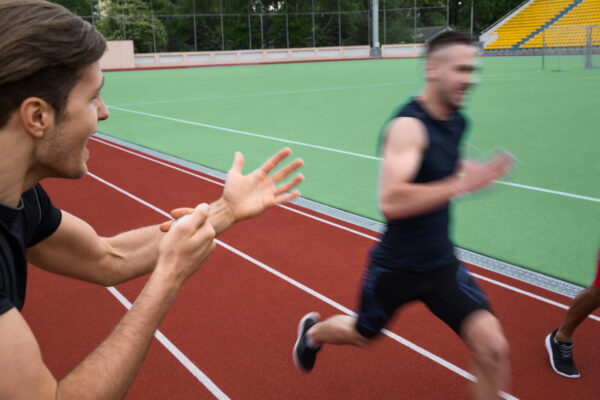
Endurance training builds your ability to run comfortably for longer periods, while threshold training helps you sustain a faster pace for longer. Your lactate threshold is the point where lactate begins to accumulate faster than your body can clear it, and the effort starts to feel increasingly difficult.
With consistent training, you can gradually improve the pace you are able to sustain around this threshold. This allows you to run faster for longer before the effort becomes too demanding. Threshold training is challenging, however, so it should be balanced with easier running and enough recovery.
Tempo runs, hill training, and intervals are useful ways to introduce this type of quality training. When used appropriately within your overall training plan, they can help you become a stronger, faster, and more confident runner.
For many runners, one quality session per week is a good starting point. If you are already able to run for around 35–40 minutes several times a week, you can gradually introduce a tempo-focused session. Start conservatively and give your body time to adapt.
It may feel challenging at first, but with patience and consistency, you should begin to notice that your fitness improves and your normal running feels easier and more enjoyable.
“Running faster for longer is not about pushing harder every day. It is about learning to hold a stronger pace with control.”
🔄 Different Types of Tempo Running

Tempo and interval training can take many forms, allowing you to adjust the workout to your current fitness level and training goal. You can run intervals over a measured distance, such as between two landmarks, or use time instead of distance. The exact distance is less important than controlling the intensity and recovery so the session has the intended effect.
Recovery periods can also vary. Shorter intervals with longer recovery allow you to maintain a higher speed during each effort, while longer intervals with shorter recovery place greater demands on both speed and endurance.
One simple way to add variety is pyramid training, where the intervals gradually become longer and then shorter again. For example:
- 8 × 400 m
- 4 × 800 m
- 3 × 1200 m
- 400 m – 800 m – 1200 m – 800 m – 400 m
You can also structure the workout by time, such as 8 × 90 seconds or 4 × 4 minutes.
As a general guideline, tempo training should feel harder than your normal running, but the effort should remain controlled. Aim to run the working intervals strongly and consistently rather than starting too fast and fading toward the end.
The goal is not simply to push yourself as hard as possible. Good tempo training teaches you to maintain a challenging pace with control — helping you gradually become faster and able to run longer.
Read more about high intensity interval training
“Good speed training is controlled enough to repeat and challenging enough to make you better.”
🤔 Frequently Asked Questions
How can I run faster and longer?
The best approach is to combine regular easy running with carefully planned quality sessions. Gradually increase your training, add tempo or interval work when you are ready, and allow enough recovery between harder sessions. Consistency matters more than trying to run every workout at maximum effort.
How often should I do tempo or interval training?
For many runners, one quality session per week is a good starting point. As your fitness improves, you can adjust the amount and intensity according to your training level and goals. The important thing is to balance harder sessions with easier running and recovery.
What is the best type of running to get faster?
There is no single best workout. Tempo runs, intervals, repetitions, hill training, and varied terrain can all help develop speed and endurance. Combining different types of training allows you to challenge your body in different ways while avoiding the monotony of running the same workout every time.
Should I run longer or faster to improve my fitness?
Both can have a place in your training, but they develop different abilities. Longer, easier runs build endurance, while faster sessions help you sustain a higher pace. A balanced training plan combines both rather than focusing exclusively on speed or distance.
How do I avoid overtraining when trying to run faster and longer?
Progress gradually and give your body enough time to recover. Hard sessions place greater demands on your muscles and cardiovascular system, so they should be balanced with easier training and rest. If your body repeatedly feels excessively tired or your performance starts to decline, it may be a sign that you need more recovery.
🏁 Final Thoughts
Running faster and longer is not about making every run harder. It is about building your fitness step by step and giving your body the right combination of endurance, speed, variety, and recovery.
Set goals that motivate you, vary your training, and gradually introduce tempo runs, intervals, hills, or other forms of quality training as your fitness develops. Just as importantly, keep some runs easy and give your body time to adapt.
You do not need to become a faster runner overnight. Small, consistent improvements add up, and the ability to run farther or maintain a faster pace becomes much more rewarding when you know you have built it patiently.
The best training plan is one you can follow consistently, enjoy, and adapt as you become a stronger runner.



Great info, Many will find it very interesting. For me, I love to run with someone when am running, I get tired quickly if I am running alone. I agree with you, my son is a runner, training with a group. Any time he didn’t go running for a long time, it will slow him down a lot.
Hi Dozzy
Thank you for the comment. It can for many of us be a good idea with a “running buddy”, to keep up the energy and motivation.
Be Well
Hello there! This is an informative post! I always wanted to be able to run faster and for a longer period but I never really put in too much effort or thought in how I would do so other than to just keep doing it. That’s really cool that you included the different types of terrain for running with a description of each. Definitely creating variety in running habits will make it more motivating. Thanks for creating this info.
Hi Mike
Thank you for the comment. Yes, variety in running will make it more motivating but also make you more resilient and strong.
Be Well
I used to run, and I used to do 5 and 10ks. I find myself not running anymore but want to start again. It has been so long, I have quite honestly forgotten where to even begin. I am out of shape with the COVID restrictions and all. So where does one start if they want to pick up running again? There are so many benefits, I just need to figure out how to get going again.
Hi Leahrae
Thank you for the comment. You can still run alone, with a certain distance between a few others or with face covers https://shrsl.com/2uner. I run alone in the evening along the beachside or in the forest with no problems.
Be Well
I liked your article on running. What spoke to me was setting goals needed to be more specific than just getting in shape. If I am more specific, I have something definite to strive for.
I also liked your description of the different running surfaces. I was with a sense of humor that I read that you don’t need to run in the wind or rain when running on the treadmill. It does sound like the treadmill has a lot going for it.
Hi Carolyn
Thank you for the comment. True, when you set your own goals you will make progress on your terms. Running on a treadmill is a good alternative, but it can become ‘hot’ since there is no wind or rain to cool us down.
Be Well