
Marathon training motivation can be the difference between finishing your long runs with energy or giving up halfway. Staying consistent over weeks and months isn’t easy, but with the right mindset and a few practical tricks, you can keep your drive alive. In this post, we’ll explore simple strategies that help you stay motivated when training feels tough, so you can build momentum all the way to race day.

🧠 Why Motivation Matters in Marathon Training
Motivation is the engine that keeps you moving through tough runs, long distances, and inevitable setbacks. Without it, even the best training plan fails. Understanding why motivation matters helps you use strategies that stick — whether that’s goal-setting, tracking progress, or celebrating small wins.
Motivation also shapes how you respond to obstacles. For instance, when a cold winter morning tempts you to skip a run, your internal motivation can turn hesitation into action. Runners who consistently tap into their “why” often notice that the mental effort of starting a run becomes easier over time, creating a positive cycle of habit and reward.
🧱 5 Levels of Marathon Motivation
Motivation to run can vary greatly and depends on individual factors, but can generally be divided into levels of external and internal motivation. Below is an infographic guide to what it might look like:
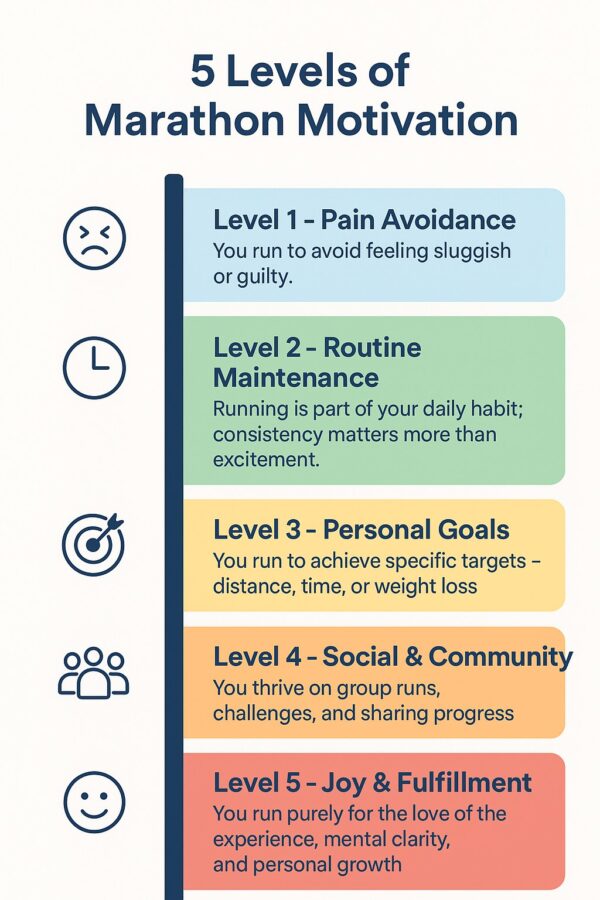
Think of motivation as a ladder. Each run represents a different reason why you run. Recognizing where you are makes it easier to climb higher.
-
Avoiding Pain: Running to escape feeling unhealthy or stressed.
-
Reducing Discomfort: Wanting running to feel easier.
-
Seeking Progress: Loving the small wins — faster pace, longer distance.
-
Chasing Achievement: Training for that medal, that finish line moment.
-
Living the Lifestyle: Running isn’t what you do — it’s who you are.
It’s worth noting that runners can move between these levels fluidly. One week you might run out of necessity, and the next week you’re inspired by the pure joy of movement. Understanding that motivation is dynamic, not static, helps you avoid self-criticism and keeps the training journey enjoyable rather than stressful.
🗨️ Reader’s Take: “I started because I was out of shape, but somewhere along the way running became part of my identity.” – Tom, marathon finisher
🩹 Pain-Driven Motivation

In the beginning, most runners are motivated by what they don’t want: feeling sluggish, unhealthy, or mentally drained. Pain-driven goals are powerful starters, but they rarely last.
Tip: Combine pain-avoidance with something positive. Example:
“I don’t want to feel unhealthy anymore, AND I want to finish my first 10K.”
📌 Related reading: How to Start Running Without Burning Out
Another way to harness pain-driven motivation is to break larger goals into micro-goals. Instead of thinking “I must run 10 miles today,” focus on completing each mile with intention. Every small victory reinforces your motivation and builds confidence that lasts beyond the discomfort.
😃 Joy-Driven Motivation

The higher rungs of motivation stem from joy — progress, achievement, and a sense of identity.
Exercise: Write down 3 things you love about running (clear head, energy, social connection) and place them where you see them daily.
You can also create a “motivation journal” to track these moments. Documenting a personal best, a scenic run, or even a supportive comment from a friend can serve as a tangible reminder that running is rewarding on multiple levels, not just during race day.
📌 Related reading: Finding Your Runner’s High — Even on Bad Days
✅ Your Marathon Motivation Checklist
Quick, actionable steps to keep you moving:
-
Set Your Goal
-
Build a Plan
-
Track Your Progress
-
Find Your “Why”
-
Run with Others
-
Mix Up Your Training
-
Visualize Success
-
Reward Yourself
-
Stay Flexible
-
Remember the Big Picture
💡 Tip: Stick it on your fridge or near your running gear — a daily visual reminder boosts consistency.
Consider adding seasonal challenges or mini-events, like a local 5K or themed long run, to keep your routine fresh. Small incentives — a favorite smoothie after a run, a new playlist, or a weekend trail adventure — can significantly increase motivation and make training feel less like a chore.
🔄 When Motivation Drops — And It Will

Every runner hits a slump. The secret is to respond before it derails your plan:
-
Switch your route or playlist
-
Add variety — strides, hills, intervals
-
Revisit your “why” — remind yourself of the bigger goal
Additionally, allow yourself small breaks without guilt. Sometimes taking a short recovery day or swapping a long run for a brisk walk is enough to reset both body and mind. Flexibility is a key part of sustaining long-term motivation.
📌 Related reading: How to Push Through Mental Walls in Training
🏗️ Build Your Motivation Safety Net

Protect your motivation with:
-
Accountability partners — friends or running clubs
-
Micro-goals — “Run 3x this week,” instead of “Crush every workout”
-
Visual cues — a race photo or medal where you’ll see it daily
Even online communities can provide support. Sharing your goals, progress, or struggles with other runners on social media or forums can create encouragement and a sense of belonging. Motivation often grows when you realize you’re not alone in your journey.
🗨️ Reader’s Take: “Having a running buddy kept me going on days I would’ve skipped.” – Sarah M.
🎯 Your Next Step
Motivation isn’t something you wait for — it’s something you create. Identify which level of the 5 Levels of Marathon Motivation you’re on today, and take one step higher. By race day, you’ll not only have the endurance for 26.2 miles — you’ll have the mindset to enjoy every step.
Remember, every run — no matter how short or slow — is a brick in the foundation of your marathon. Celebrate consistency as much as performance. Motivation is built one run at a time, and over months, these small efforts accumulate into confidence, resilience, and joy.
💬 If you found this post helpful, please share it with a fellow runner who could use a little motivation today.